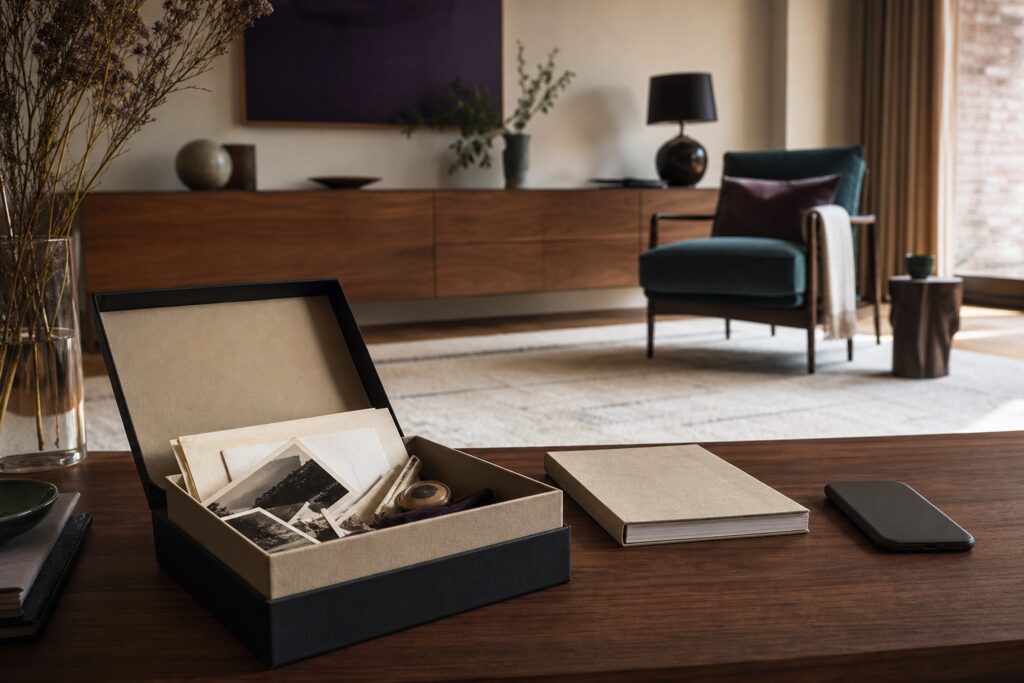



Stronger relationships and organizing are more connected than most people realize. February tends to put relationships under a microscope, Valentine’s Day amplifies connection, expectation, intimacy, and sometimes tension. But long before conflict shows up in conversation, it often starts in the environment. Disorganization quietly creates friction, drains patience, and makes daily life feel heavier than it needs to be.
Disorganization creates friction in relationships long before conflict ever does.
Not because anyone is “messy,” but because clutter, physical or digital, steals time, attention, and emotional bandwidth. When your environment is chaotic, patience thins. Decisions feel heavier. Small irritations escalate faster than they should. When it comes to organization and relationships, shared spaces matter more than we think.
This month, instead of focusing on grand gestures, consider something more lasting: reducing friction. Organization isn’t about perfection, it’s about creating space for better connection.
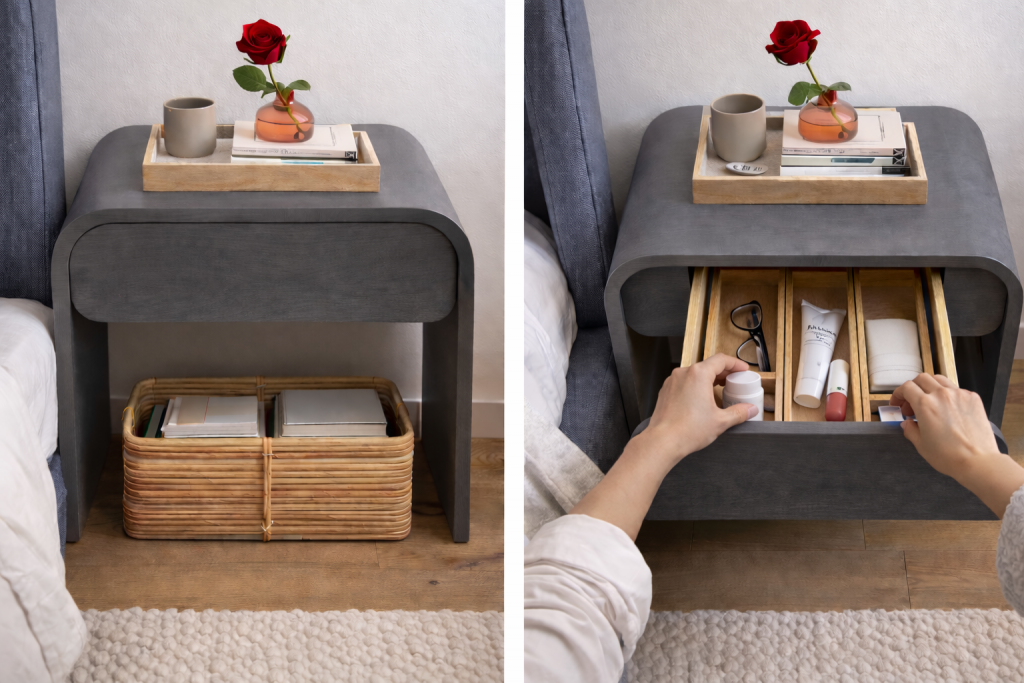
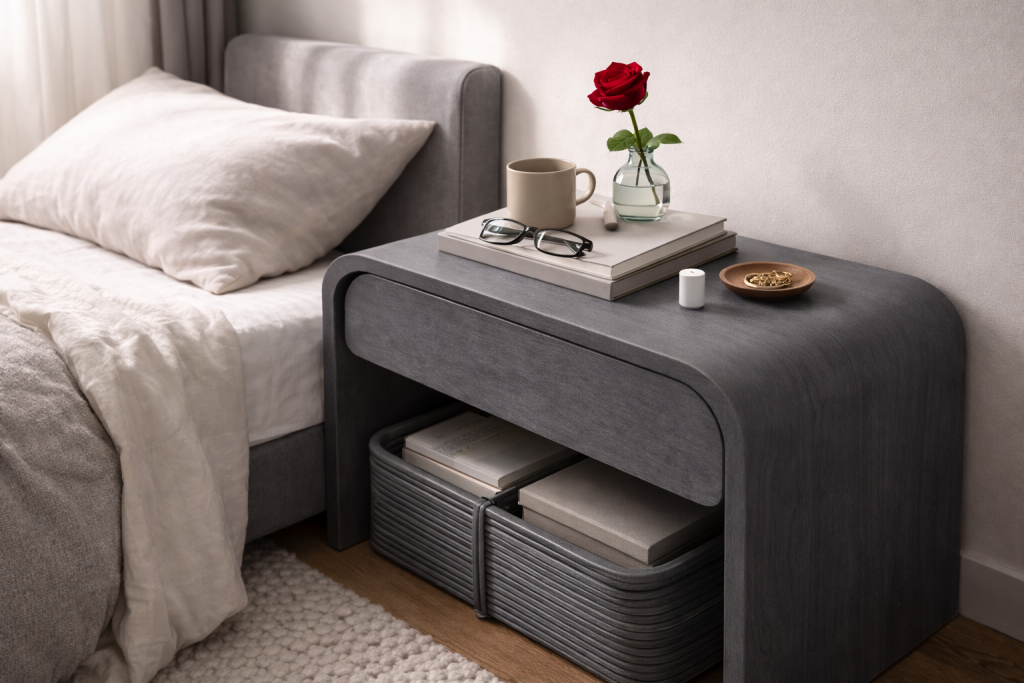
Organization and relationships shown through a calm bedside table setup that reduces daily friction.
Below are five ways organization directly impacts relationships, and how to reset with intention.
1. Shared Spaces Reflect Shared Respect
Whether it’s a bedroom, kitchen, or living room, shared spaces quietly communicate how much care is being taken, for the space and for each other.
When surfaces are perpetually overloaded or items never return to their place, it creates a low-grade stress that both people feel, even if no one names it.
Our professional home organization services focus on creating systems that support real life, not perfection.
February reset:
Choose one shared space and agree on a simple standard, not perfection, just functionality. Fewer items out. Clear landing zones. Nothing ambiguous.
Clarity removes resentment before it forms.
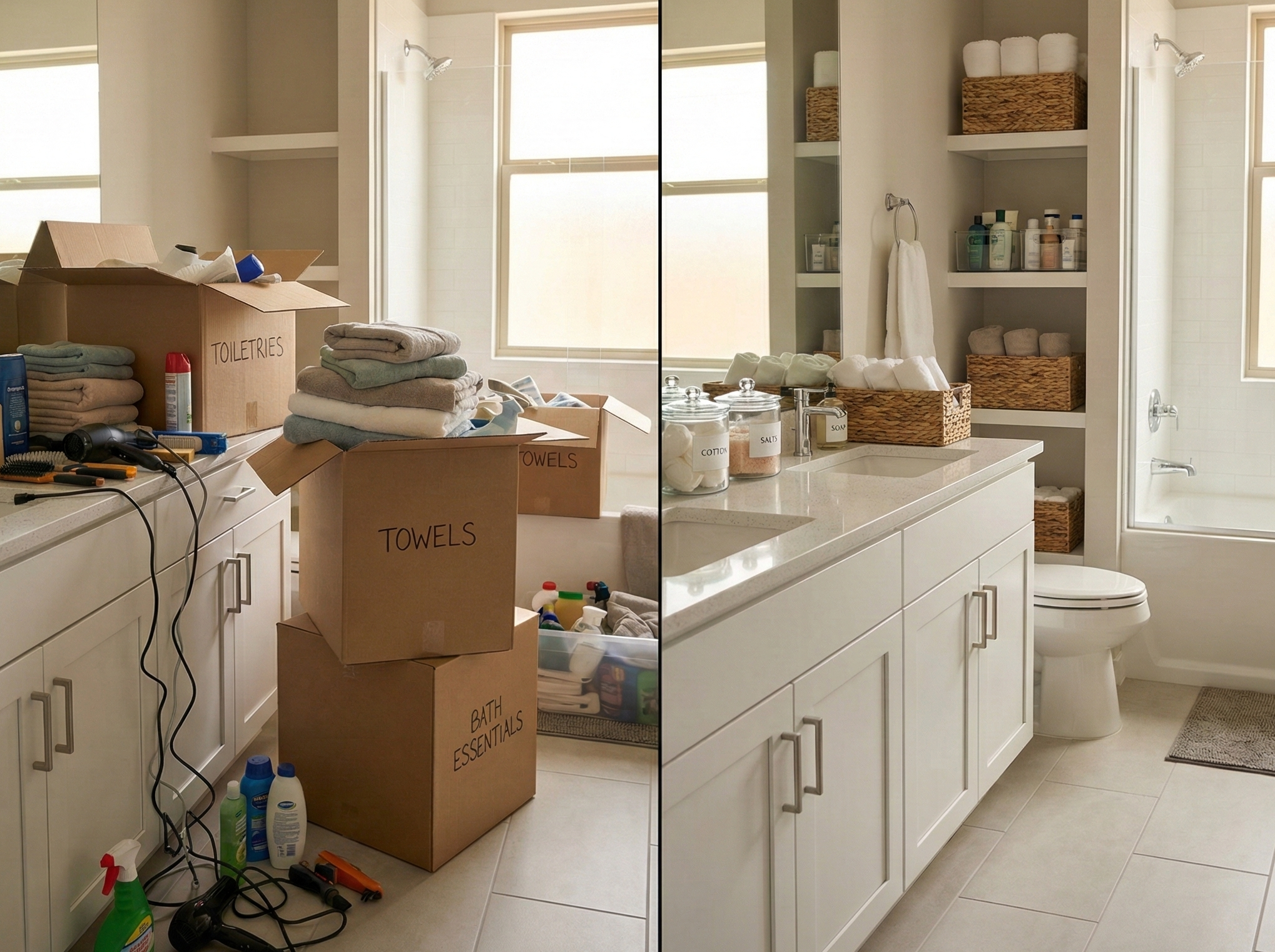
2. Clutter Turns Small Moments Into Negotiations
When things don’t have homes, every moment becomes a decision:
- Where did you put that?
- Can you move this?
- Why is this still here?
Over time, these micro-negotiations drain energy that could be spent connecting and fighting can and will occur.
February reset:
Create default systems so fewer conversations are required. Hooks, bins, trays, drawers, systems remove the need to ask, remind, or manage.
The best systems are the ones that eliminate conversation entirely
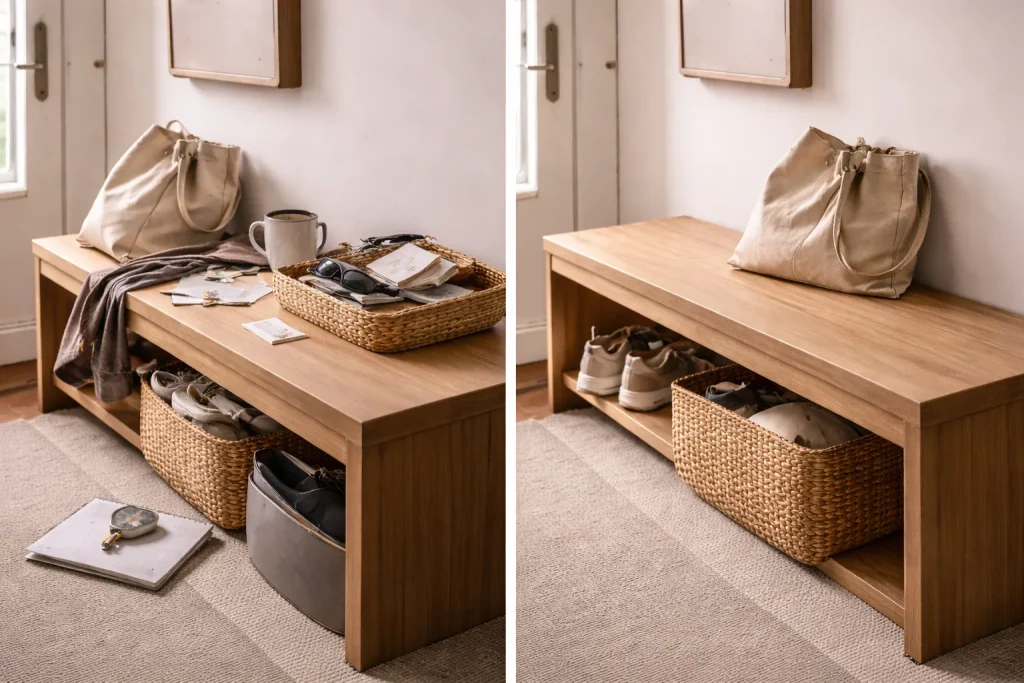
3. Organization Reduces Emotional Reactivity
Disorder doesn’t just live in the room, it lives in the nervous system. When your environment is visually loud, your stress tolerance drops. That’s when reactions feel bigger than the moment calls for. Studies from Harvard Health show that clutter and environmental stress can impact mood, focus, and interpersonal connection.
This is especially true in close relationships, where we’re least filtered.
February reset:
Declutter visually noisy zones: nightstands, countertops, entryways. These are transition spaces. When they’re calm, you arrive and leave each interaction in a better state.
A calmer space creates calmer responses.
4. Digital Chaos Is the Silent Relationship Stressor
Screenshots saved “just in case.” Thousands of unread emails. Notes scattered across apps. Digital clutter creates mental drag, and that drag follows you into conversations, meals, and downtime.
You may be physically present but mentally fragmented. Digital clutter plays a major role in stress and distraction, which is why digital organization is just as important as physical space.
February reset (digital):
- Delete screenshots you no longer need
- Clear your desktop and phone home screen
- Unsubscribe from emails that don’t serve you
Digital organization isn’t about control—it’s about presence.

5. Organization Is an Act of Care, Not Control
One of the biggest misconceptions is that organization is about being rigid or obsessive. In reality, it’s about making life easier for the people you live with and love.
When systems work, no one feels managed. Everyone feels supported.
Research shows that physical environments directly affect stress levels, emotional regulation, and how we relate to others, according to the American Psychological Association.
February reset:
Ask one simple question:
“What would make daily life easier for both of us?”
Then organize around that answer, not around aesthetics or trends.
Valentine’s Day lasts one day.
Reduced friction lasts all year.
Organization won’t fix a relationship, but it removes unnecessary obstacles that get in the way of connection, patience, and intimacy. When your space supports you, you show up better. When you show up better, relationships follow.
This February, skip perfection.
Choose clarity.
Choose ease.
Choose systems that give you more room to love, and live.
Organize & Create Discipline