


Introduction
We’re living in an era where technology is not just helping us, Tech is doing everything. volunteering to take over entire parts of our lives. Cars want to drive for us. Phones want to think for us. Google Drive wants to label our files like a well-meaning but slightly overeager intern, who hasn’t yet learned the foundational principals of Organize & Create Discipline. And honestly? Most of it is incredible. I’m a full supporter of using technology to make life easier, cleaner, and more efficient.
But there’s a quiet tradeoff happening underneath all that convenience: if we let machines do everything for us, we stop practicing the muscles (brain muscles too) that made us capable in the first place. Autonomy is a gift, until it becomes atrophy. And the truth is simple: if you never use a skill, you lose it. That’s not opinion. That’s biology.
This deep dive of mine looks at three areas where we’re starting to surrender too much. And yes, we can laugh about it—but the facts are still the facts.
1. Autonomy vs. Atrophy: The Danger of Skill Loss
Let’s start with the big one.
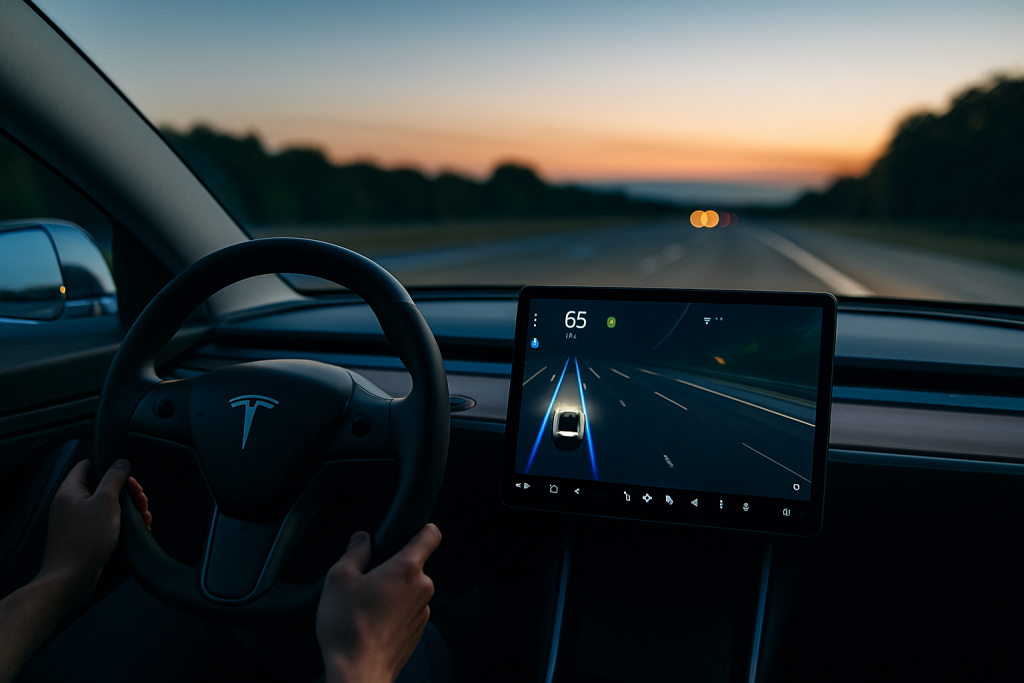
Self-driving is extraordinary. Watching a car glide through traffic while you sip your overpriced matcha like the future has finally arrived? Beautiful. But the second autopilot kicks itself off and flashes “Take Control”, you better remember how to actually take control.
Driving is a perishable skill. Reaction time, spatial awareness, muscle memory, they fade if unused. It’s like the gym: skip a few weeks and suddenly the treadmill feels like a betrayal. Skip a few years of actually driving and you don’t want the moment you’re forced back into the driver’s seat to be during an emergency.
The danger isn’t technology. The danger is forgetting how to do the things we once did automatically.
If the car needs you, you need to still be there.

2. Cognitive Off-Loading: When Convenience Quietly Steals Competence
AI is incredible at organizing our digital chaos. It remembers what we forget, sorts what we ignore, labels what we never got around to labeling. It’s like having an assistant who never sleeps and somehow never asks for a raise.
But here’s the punchline: if you stop organizing your own digital world, your brain stops knowing how to organize anything. File structure is a discipline. Naming conventions are a discipline. Even something simple like remembering where you put your documents, yes, your brain needs that too.
Technology says, “Don’t worry, I’ve got it.”
And we say, “Perfect, thank you.”
And our cognitive muscles slowly shrink in the background like unused laundry-room biceps.
This is not about fear. It’s about awareness. These tools should amplify your capacity, not quietly erase it.
3. Dangers of Relying On Technology Too Much
Here’s where it all lands.
The easier life becomes, the easier it is to feel like we’re participating, when really, we’re just being carried. A fully optimized life without actual agency feels great, until the moment you have to do something manually and you realize you’ve forgotten how.
We lose:
- Confidence (“Wait… do I actually know how to do this?”)
- Discipline (Why think if the system thinks for me?)
- Agency (Life starts happening to us instead of through us.)
Humor makes this easier to swallow, but the truth is sharp:
If we never practice how to stay grounded, we slowly forget how to function without a machine doing it for us. That’s how people forget how to drive, forget how to think through a filing system, forget how to operate the basics of their own lives.
The paradox is simple: the tech that frees us can also hollow us out, unless we keep exercising the human skills that made us capable in the first place.

4. Tools Should Empower Us, Not Replace Us
Use the tech. Celebrate the tech. Let it streamline your world. But don’t surrender your agency so completely that you wake up one day and realize you’ve outsourced your competence.
Self-driving, AI-sorting, autopilot-everything systems are incredible, but just remember:
They’re supposed to make you sharper, not softer.
They’re supposed to enhance your life, not steal your ability to live it.
A little humor helps, but the facts stay the facts.
Brains need work. Skills need practice.
And autonomy only matters if you still know how to take the wheel when the system hands it back.
Happy autonomy-
Justin Klosky