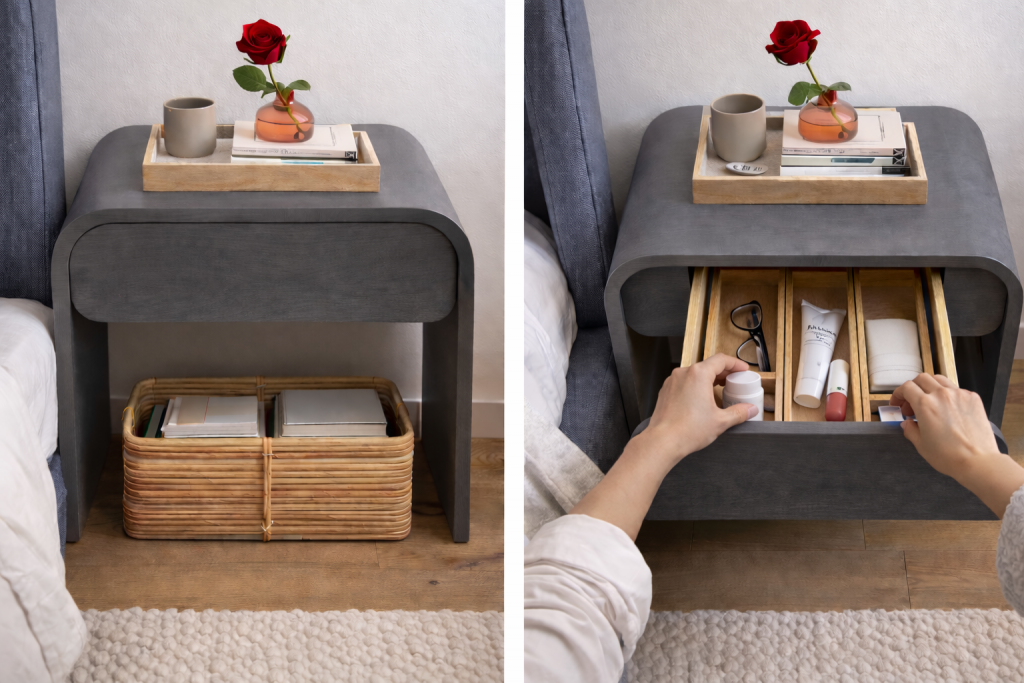



Home organization is not a test of how much you can throw away.
It is the practice of making intentional decisions that support the life you are building.
For more than 17 years, I have worked inside thousands of homes, from celebrity residences to busy family homes and executive spaces. One thing has become incredibly clear: yes, people struggle because they are “messy,” but they also struggle because objects carry stories.
Sometimes that story deserves to stay. Other times, it deserves a better place. Eventually, it may be time to let the object go while keeping what the story taught you.
There is no prize for making that decision before you are ready. The goal is not to strip your home of meaning. The goal is to make what matters easier to find, enjoy and protect, and to stop asking everything else to compete for your attention.
Here are 10 decisions worth reconsidering, without shame and without pressure.
1. Gifts That Bring Back Pain
A gift from someone who hurt you does not have to stay on display because you feel guilty. It also does not have to go into a trash bag the moment you recognize the pain.
Ask yourself:
Does this object remind me of who I am today or who I was forced to be then?
If it no longer supports your life, donating, recycling or releasing it may feel surprisingly freeing. If you are not ready, move it out of daily view and into a clearly labeled reconsideration container. Give yourself a date to revisit it. Space can be temporary while the decision becomes clear.
2. Broken Items
We all have that drawer, shelf or corner: the lamp we will fix, the blender missing a part, the chair we have been meaning to repair, those favorite jeans that need the knee patched.
Instead of asking, “Could I fix this someday?” ask:
Have I actually made time to fix it?
Set a real repair deadline. Put the item with the part, tool or professional needed to complete the job. If the date passes again, the object may no longer be a future project. It may simply be taking up valuable physical and mental space.
3. Things Waiting for “One Day”
The unworn jacket. The unopened craft kit. The exercise equipment. The duplicate kitchen gadget. These objects often represent hope, and hope is can be disguised as clutter and postponing a decision forever will become clutter.
If something genuinely belongs in your future, give it an intentional home and a next action. Schedule the class. Tailor the jacket. Choose the recipe. If you are unwilling to give it time or space, let someone else enjoy it today.
4. Home Organization Beyond Paper
Paper is not the enemy. Unorganized information is.
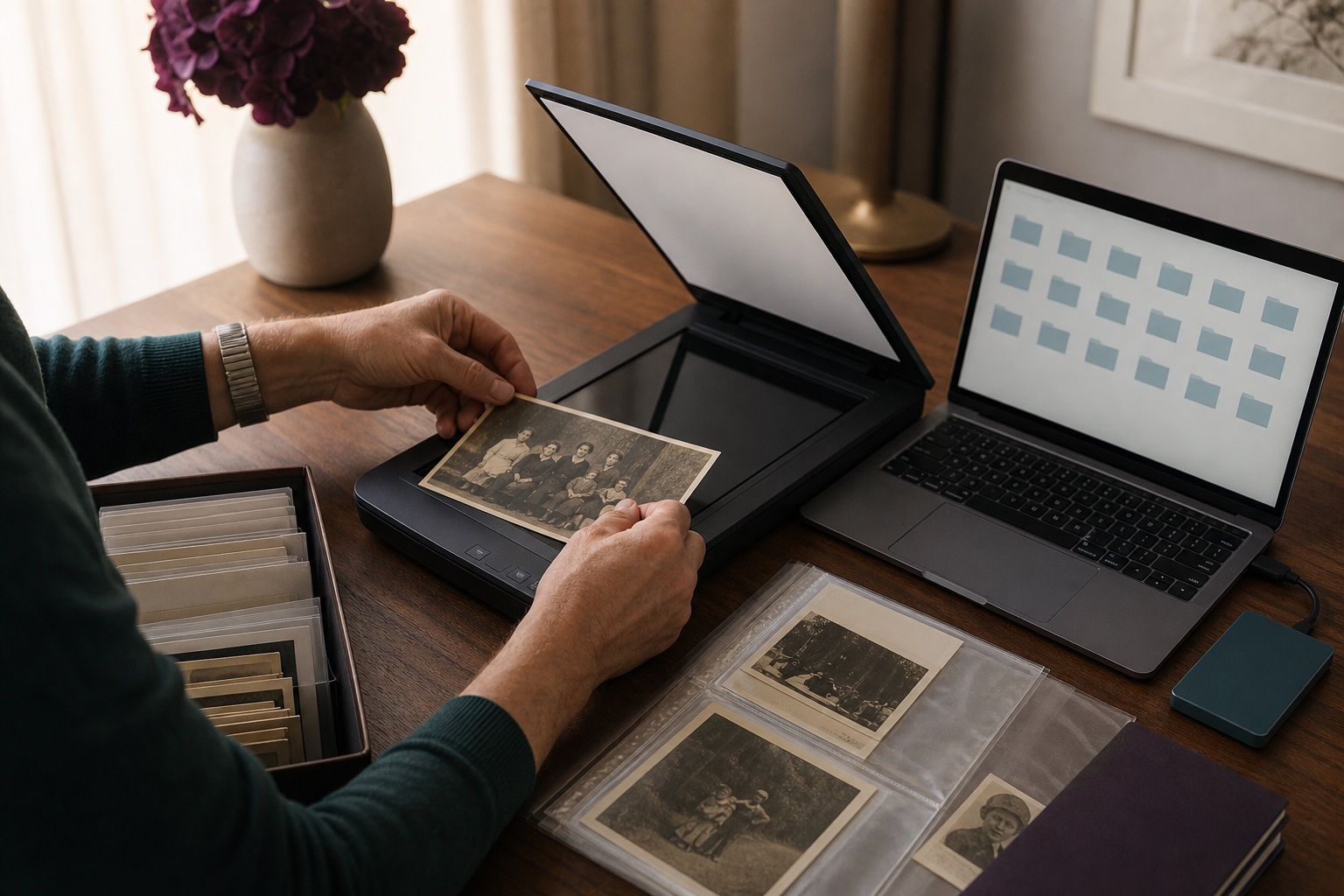
Old family recipes, letters, children’s artwork, travel journals and photographs may be priceless. Rather than treating every piece of paper as disposable—or storing every piece forever—separate the information from the material.
Digitize what you want to access, share or protect. Preserve original documents when their physical form has historic or emotional value. Recycle duplicate copies and paperwork that no longer serves a legal, financial or practical purpose. Parents can also explore Artkive for children’s artwork.
When organized correctly, digital memories can become searchable, backed up and available wherever your family needs them. The Library of Congress personal digital archiving guidance is a useful independent resource for preserving family memories and digital collections.
5. Digital Clutter Counts Too
Thousands of screenshots. Duplicate photos. Downloads you cannot identify. Old desktop files. Unread email. Apps you no longer use.
Your digital environment creates friction just as surely as an overfilled drawer. Every unnecessary notification, unlabeled folder and duplicate file asks for a small piece of your attention.
Organization does not stop at your front door. It follows you into your phone, computer, cloud storage and every device you touch. A thoughtful digital organizing system should make important information easier to locate, protect and maintain—not simply move the mess from one screen to another. Explore the 7-Day Digital Reset: a self-guided experience built into our private platform, with prompts and practical actions you can work through on your own schedule. It is not live supervision or a complete Digital Infrastructure Audit.
6. Clothes That No Longer Represent You
Instead of asking only, “Have I worn this?” ask:
Does this represent the person I am becoming and I am today?
Sometimes we keep clothes because they fit a previous chapter, a former job, a past body or a version of ourselves other people expected to see.
Keep what fits your present life, supports a real need or carries meaning you consciously choose. Tailor what deserves another chance. Create a small, protected archive for truly important garments. Release the rest without turning your closet into a judgment of who you used to be.
7. Home Organization for Sentimental Items
Sentimental belongings deserve more than random bins and mystery boxes.
Create a memory collection. Label it. Protect it from light, moisture and careless handling. Digitize what can be preserved digitally. Display what deserves to be seen. Record the names, dates and stories that future generations will not automatically know. This is preservation with a system at its center.
Legacy is not clutter. It simply needs a thoughtful system.
Don’t Throw Away Your History. Preserve It.
Minimalism is not the goal. Access is. Preservation is.
Family archives, letters, photographs, home movies, awards, recipes, journals and memorabilia carry information that may exist nowhere else. Once the people who know those stories are gone, an unlabeled photograph or unidentified recording can become impossible to understand.
A basic preservation system can begin with five steps:
- Group materials by family, person, event or era.
- Remove obvious duplicates and unstable storage materials.
- Create high-quality digital copies without destroying important originals.
- Use clear file names and record the people, place, date and story whenever possible.
- Keep at least two protected copies in different locations, with appropriate privacy for sensitive records.
Some of the most valuable organizing work I do today is not inside a closet. It is helping people preserve their lives digitally so the people and moments that matter can still be found, shared and protected.
8. Empty Containers and “Useful” Boxes
We all save boxes “just in case.” Sometimes that is practical. Sometimes it is habit wearing a useful disguise.
Instead, set a boundary based on the life you actually live: one shelf, one bin or a specific number of shipping boxes. Flatten what can be stored efficiently. Recycle anything that is damaged, oddly sized or unlikely to be used.
Your storage should support your life, not become another project to manage.

9. Duplicates Without a Defined Job
Duplicates are not automatically wasteful. For example, a second set of chargers in your travel bag or a backup household supply in a designated location may remove friction, especially if you have kids.
However, the problem begins when duplicates have no defined role. Five pairs of scissors disappear into five different drawers. Extra cleaning products get purchased because no one can see what is already there. The backup becomes invisible, so it cannot do its job.
Keep the best version. Assign each necessary duplicate a specific home and purpose. Good home organization makes every duplicate earn its place. Release the extras that exist only because a decision has been postponed.
10. Home Organization for Inherited Belongings
An inherited object can hold love, family history and obligation at the same time. Keeping everything is not the only way to honor someone, and letting an item go does not erase the relationship.
Choose representative pieces that tell the story well. Photograph or scan what you want to remember. Write down the history while someone can still explain it. Offer meaningful items to relatives who will use or protect them. Donate what can continue its life elsewhere.
The relationship is not stored only in the object. Preserve the story, then decide what deserves space in your present.
If You Are Not Ready Yet
“Not now” can be an intentional decision when it has a boundary.
Create one clearly labeled Reconsider container. Add the date and a short note about why each item is unresolved. Schedule a review in 30, 60 or 90 days. Do not scatter undecided objects throughout the home where they will quietly become permanent.
Compassion does not mean avoiding every decision. It means creating enough structure to make the decision honestly.
Home Organization Is Really About Peace
A clean home will not solve every problem. An organized closet will not erase anxiety. But reducing unnecessary friction gives your mind fewer things competing for its attention.
Organization is not about perfection. It is about creating an environment that quietly supports your everyday life.
Every item you own should do at least one of three things:
- It serves you.
- It brings you joy or meaning.
- It preserves something worth remembering.
If it does none of those things, it may be time to reconsider its place.
And if it matters deeply, do not allow it to disappear into a box you can no longer understand. Give it a system. Add context. Then give it a way to remain part of your life.
Need help with home organization that does not strip your space of its history? Explore Physical O.C.D. home organizing, learn about Digital O.C.D., or request organizing support.