

Your home does not end at your front door. It lives on your phone, inside your inbox, across your calendars, and in the files your family relies on every day.
You can have an organized closet and still spend twenty minutes searching for a document. You can have boxes of family photographs neatly stored and no practical way to share those memories. You can own something valuable and have no idea where its receipt, warranty, or photo lives.
That is why organizing the things you can touch is only part of the work.
At O.C.D. EXPERIENCE, we bridge tangible and digital organizing. We connect the belongings, information, and routines that make your life work, so important things have a clear home whether they live on a shelf or a screen.
Our expanded digital organizing offerings give you different ways to begin: work on your own, get hands-on help with one priority, or understand the bigger system before making changes.
What Is Digital Organizing?
Digital organizing is the work of making your information easier to find, understand, use, and maintain. It is more than deleting files or moving everything off your desktop.
A useful system tells you where something belongs, how to retrieve it, who should have access, and what happens when new information arrives.
That can mean:
- Clear folders and meaningful names for documents and important records.
- An inbox that separates action from information you need to keep.
- Photo libraries that make memories easier to find and share.
- Calendar entries that hold the details people need, not just a date.
- A considered approach to passwords, subscriptions, apps, and account access.
- A practical connection between paper originals and their digital copies.
- A review of devices, storage, and backups when the work spans several tools.
The goal is not an empty screen. It is less guessing about where your life lives.
The Tangible And Digital Belong Together
A paper document and its digital copy should be part of the same plan. So should a storage bin and the record of what is inside it. Your family’s calendar should connect to the commitments that shape your home.
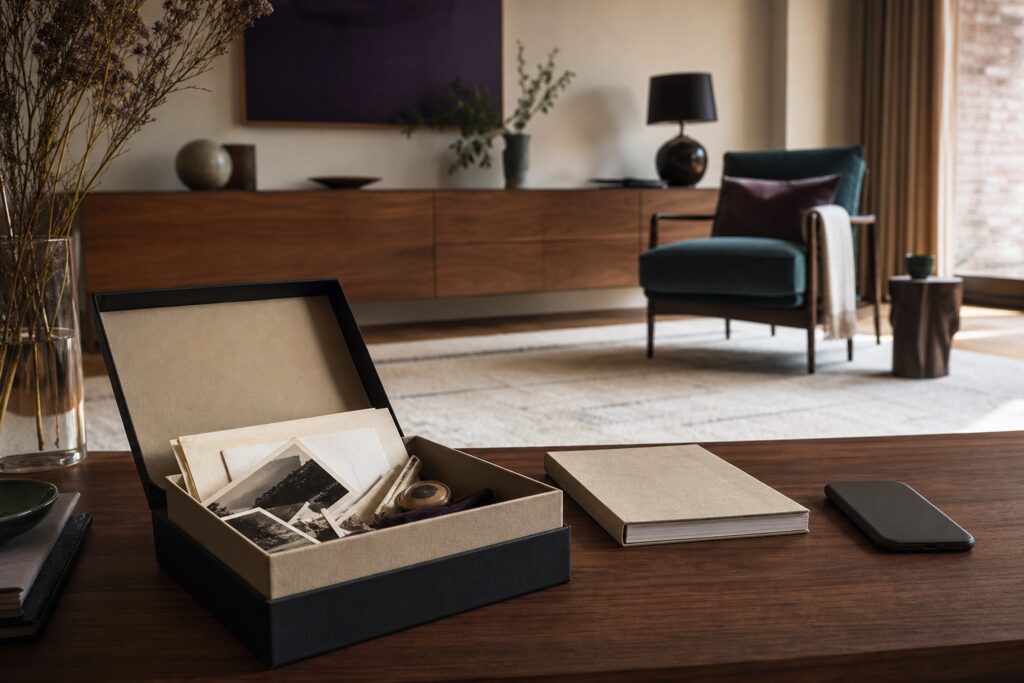
For example, a scanned document becomes more useful when it has a descriptive name and an appropriate folder. A holiday bin becomes easier to use when its label matches a photo of its contents and a note about its location. A travel confirmation becomes easier to follow when the relevant details are attached to the calendar event and shared with the people who need them.
These are not separate organizing problems. They are connections we can make more useful.
Start On Your Own With O.C.D. 007
O.C.D. 007: The 7-Day Digital Reset is the self-guided starting point.
Work inside your private O.C.D. workspace with prompts and a 33-minute focus timer. Choose an area of your digital life and begin using the tools you already have, on your own schedule.
This is not a live appointment or an organizer working on your computer. It is a way to begin practicing the O.C.D. approach yourself, before deciding whether you want private help.
Choose this when: you want a manageable first step and are ready to do the work independently.

Work On One Priority In A Focus Session
Sometimes you know exactly what is frustrating you. Your Downloads folder has become a holding area. Your inbox mixes tasks with records. A collection of documents needs a naming and filing system you can actually follow.
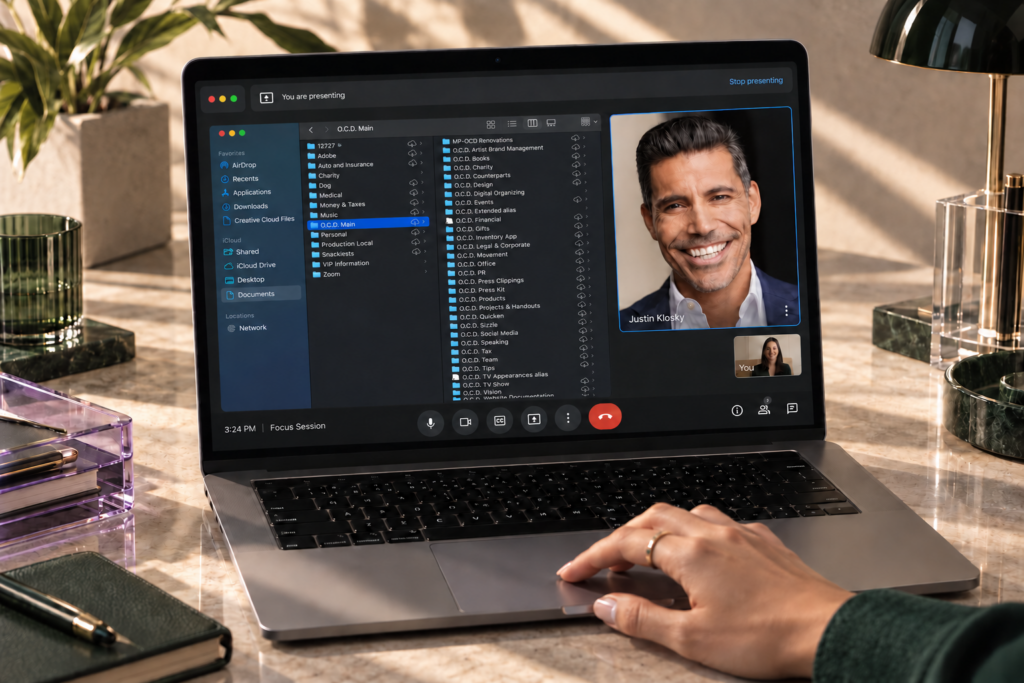
A Digital Organizing Focus Session gives you private, one-on-one help with a defined digital challenge. Bring the problem and work alongside an O.C.D. organizer inside the tools you use.
Choose this when: you know what needs attention and want help making the changes. You do not need to start with a full audit to address one clear priority.
Map The Bigger Picture With An Audit
When the friction stretches across several devices, accounts, folders, or people, another quick cleanup may not explain what needs to change.
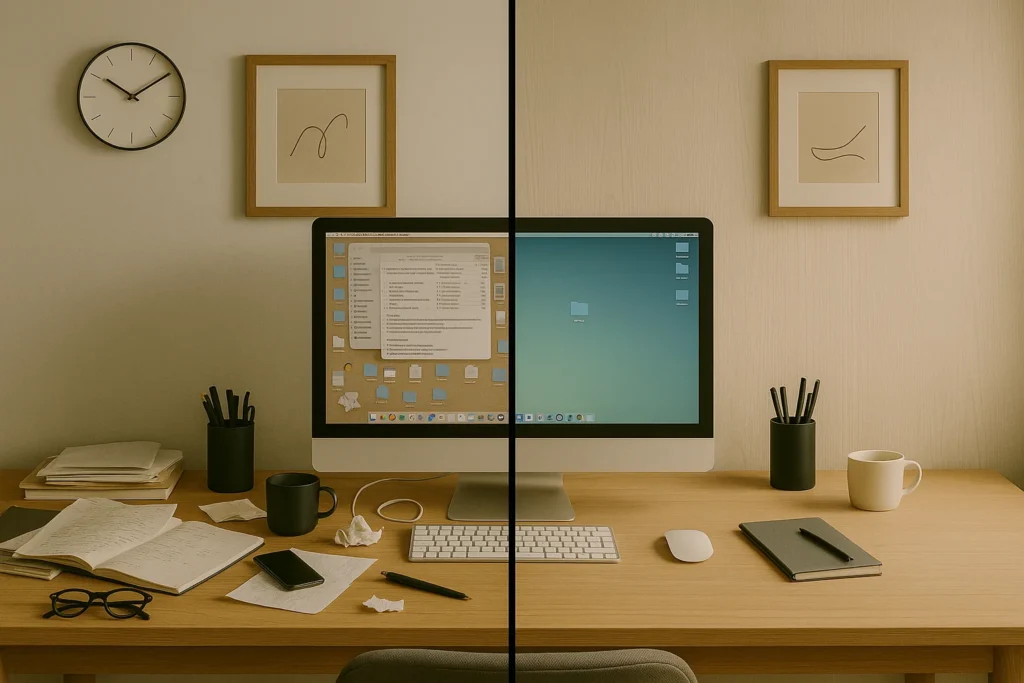
The Digital Infrastructure Audit looks at how your digital life fits together. The assessment leads to a Digital X-Ray and an Architecture Roadmap, giving you a clearer understanding of the system and the priorities to address.
The audit is the assessment and plan. It is not a promise that every file, device, or workflow will be rebuilt during the appointment. Implementation and additional hands-on work are separate next steps.
Choose this when: you need to understand the whole system before deciding what to fix first.
Connect Your Belongings With The Inventory App
Digital organizing also applies to the things you own.
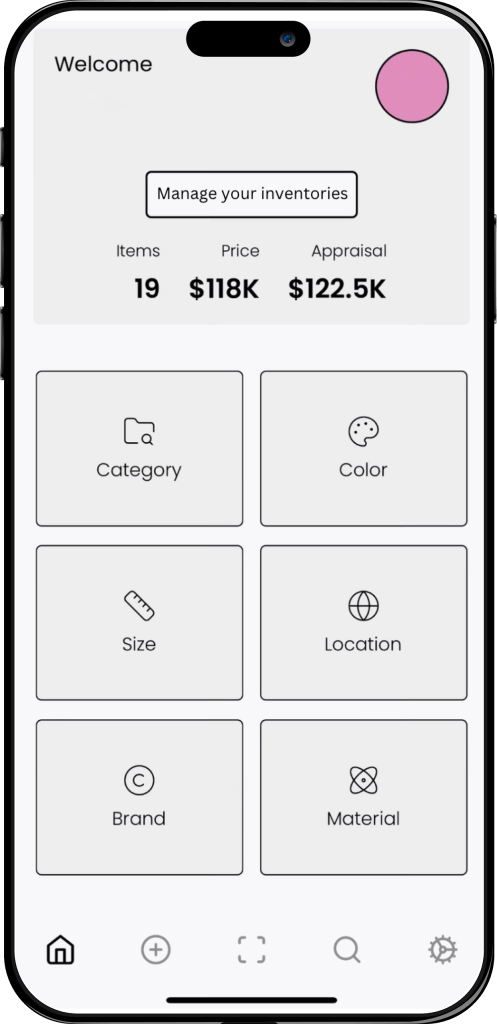
The O.C.D. Inventory App provides a way to create digital records for physical belongings. Instead of leaving the information about an item scattered through your memory and camera roll, you can begin building a more useful record of it.
This is where tangible and digital organizing meet directly: the object exists in your home, and its information has a digital home.
Choose this when: understanding what you own is part of organizing a home, collection, storage space, or move.
Bring Structure To Your Business Systems
For entrepreneurs and teams, the challenge may reach beyond personal files. Information needs to move between people, projects, tools, and decisions.
Digital O.C.D. can help you think through business files, inboxes, access, and the way information moves between people. Start with a defined priority in a Focus Session, or use the Digital Infrastructure Audit to understand the broader structure before deciding on implementation.
Choose this when: your business needs a shared structure for finding information and handing work from one person to another. Explore the audit as a starting point for discussing the broader work.
One Small Action You Can Take Today
Choose one document you regularly search for. Give it a name you will recognize, place it in an appropriate folder, and make sure you can find it again without relying on a recent-files list.
If there is a paper original, give that original a clear home too. Keep documents that need to remain in their original form. Do not discard originals simply because you have scanned them, and do not treat device synchronization as a substitute for a backup.
You do not have to reorganize every part of your life today. Start with one useful connection.
Choose The Help That Fits Your Life
Start with O.C.D. 007 to work independently. Choose a Focus Session for one defined priority. Choose the Audit when you need a broader plan. Explore the Inventory App to connect your belongings with their records. If the work involves a business or team, talk with us about the people and information your system needs to support.
If your digital needs are part of organizing a home or planning a move, our Physical O.C.D. and Moving O.C.D. services belong in that conversation too.
Not sure which path fits? Talk with O.C.D. about what is making daily life harder, or explore Digital O.C.D..
Your belongings and your information should work together. That is the O.C.D. EXPERIENCE.